
Radiation sterilization refers to the method of eliminating microorganisms using ionizing radiation. Commonly used radiation sources include gamma rays generated from the decay of Cobalt-60(60Co) or Cesium-137(137Cs) , electron beams produced by electron accelerators, and X-rays generated by X-ray devices. This method is suitable for sterilizing radiation-resistant medical devices, production auxiliary supplies, pharmaceutical packaging materials, active pharmaceutical ingredients (APIs), and finished products.
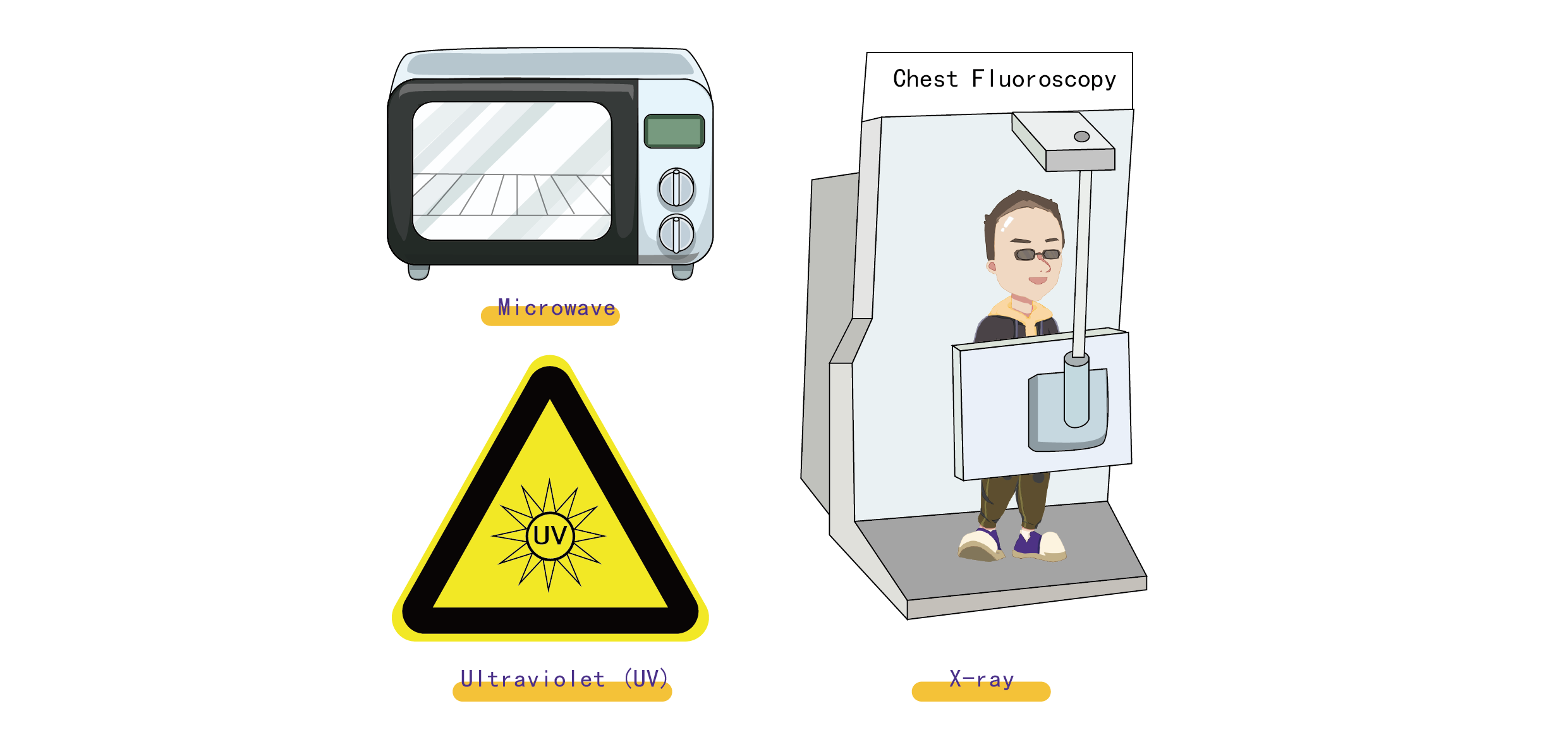
Different types of radiation eliminate microorganisms through distinct mechanisms:
• Microwaves: Kill microorganisms primarily through thermal effects.
• Ultraviolet (UV) Light: Induces the formation of pyrimidine dimers between adjacent pyrimidines in DNA molecules, thereby inhibiting DNA replication and transcription, leading to microbial death.
• X-rays and Gamma Rays: These ionizing radiations can oxidize other substances or generate free radicals (OH·H)) that subsequently interact with biological molecules. Alternatively, they may act directly on biological molecules by breaking hydrogen bonds, oxidizing double bonds, disrupting cyclic structures, or inducing polymerization. These actions damage and alter the structure of biological macromolecules, resulting in the inhibition or death of microorganisms.
Material Compatibility
Some polymers used in filter manufacturing have limited tolerance to radiation sterilization. Filters may require radiation-resistant polymeric materials or the addition of antioxidants to protect the polymer from degradation caused by excessive radiation exposure.
Advantages and Disadvantages
Radiation sterilization offers several advantages:
• High level of sterility assurance.
• No residual gas or chemical sterilization agents.
• Maintains filter dryness.
• Minimizes the impact of filter packaging on the sterilization process.
However, there are also disadvantages:
• Limited compatibility between filters and high-dose radiation.
• Limited shelf life.
• Steam sterilization of filters previously sterilized by gamma radiation may increase the levels of extractables and leachables and compromise filter integrity.
Validation and Process Control
Like other sterilization methods, radiation sterilization requires validation to ensure sterility and stability. To guarantee that the sterilization process does not affect the safety, efficacy, and stability of the sterilized items, the maximum acceptable dose must be determined.
The primary parameter controlled in radiation sterilization is the radiation dose (specifically, the absorbed dose of the sterilized item). The establishment of the sterilization dose must ensure that the Probability of a Non-Sterile Unit (PNSU) after sterilization is ≤10-6.
Radiation sterilization should utilize the lowest effective dose possible. The key to validation is the dose mapping study. Before conducting dose mapping, the packaging format, density, and loading pattern of the sterilized items must be defined. Dose mapping determines the maximum and minimum dose values and their respective locations within the load. If reference dosimeter locations are used for routine monitoring, the relationship between their dose values and the maximum/minimum doses must be established.
Biological indicators are generally not used for microbiological challenge testing in radiation sterilization validation.
Routine Monitoring
Beyond process development and validation prior to implementation, routine operations must include bioburden monitoring and periodic dose audits to ensure the continued effectiveness of the radiation sterilization process and dose.