
Can integrity testing be performed directly on the product?
Yes, but under specific conditions.
Determining the diffusive flow value for a product-wetted filter involves two steps:
1. Determine the test pressure.
2. Determine the ratio of diffusive flow values between two wetting liquids (e.g., product and water).
Step 1: Determine the Test Pressure
The test pressure for product-wetted diffusive flow can be calculated using the following formula:
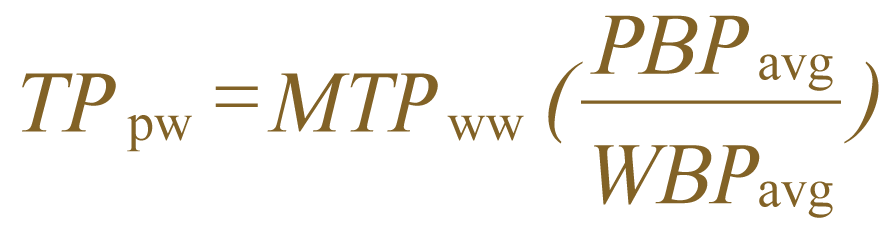
Where:
*TPpw = Test pressure for product-wetted filter (varies with surface tension)
*MTPww = Standard test pressure (e.g., water-wetted)
* PBPavg = Average product bubble point obtained from testing
* WBPavg = Average water bubble point obtained from testing
Step 2: Determine the Product-Wetted Diffusive Flow Value at the Test Pressure
Perform multiple tests using the standard forward flow test method, taking water-wetted conditions as an example:
1. After drying, wet the filter with the product.
2. Perform the test at the product-wetted forward flow test pressure determined in Step 1.
3. Calculate using the following formula:
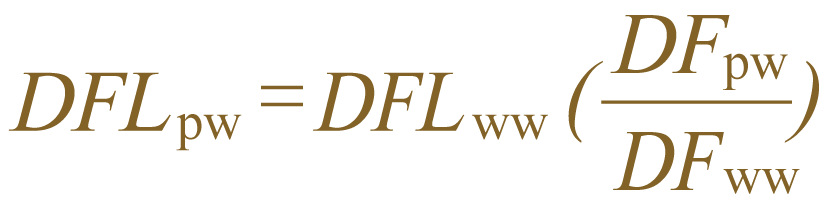
Where:
*WBPavg = Product diffusive flow standard
*DFLww = Water-wetted diffusive flow standard
*DFpw = Product-wetted diffusive flow
*DFww = Water-wetted diffusive flow
The diffusive flow ratio depends on the diffusion constants and solubility coefficients of the test gas in these liquids and is independent of the interaction between the liquid and the filter. Therefore, in this test, one or more filters may be used, and potential differences in test results can be eliminated by averaging multiple replicate tests.
Alioth Verification Laboratory
The Alioth Verification Laboratory provides pharmaceutical manufacturers with bacterial challenge, extractables, leachables, compatibility, product-wetted integrity parameter, and adsorption verification services. It also conducts internal verification of company products to provide experimental data for verification guidelines. The laboratory adheres to the ISO 9001 quality management system and upholds the concept of data integrity to ensure that data are authentic, accurate, and traceable.
The laboratory’s core staff possess extensive process validation experience. Scientific and rational validation methods are employed to ensure the provision of filtration process validation services that comply with global regulatory requirements. Adhering to the quality principle of meeting customer needs, the laboratory offers comprehensive verification services, including regulatory interpretation, process evaluation, and validation report assessment, as well as process validation services for both its own products and those of other manufacturers.