
The “Core Insights” Knowledge Series launches a dedicated on gas filtration in this issue, sharing expertise on gas filters from the perspectives of mechanism, application, and validation.
In the biopharmaceutical industry, filters are primarily used to remove impurities from process streams or to achieve sterilization, thereby ensuring safe and smooth production. Depending on the medium, filters are categorized into gas and liquid filtration. Today, we will delve into the retention mechanisms of gas filters.
How Do Gas Filters Work?
The retention mechanisms of gas filters are more complex than those of liquid filters and can be categorized as follows:
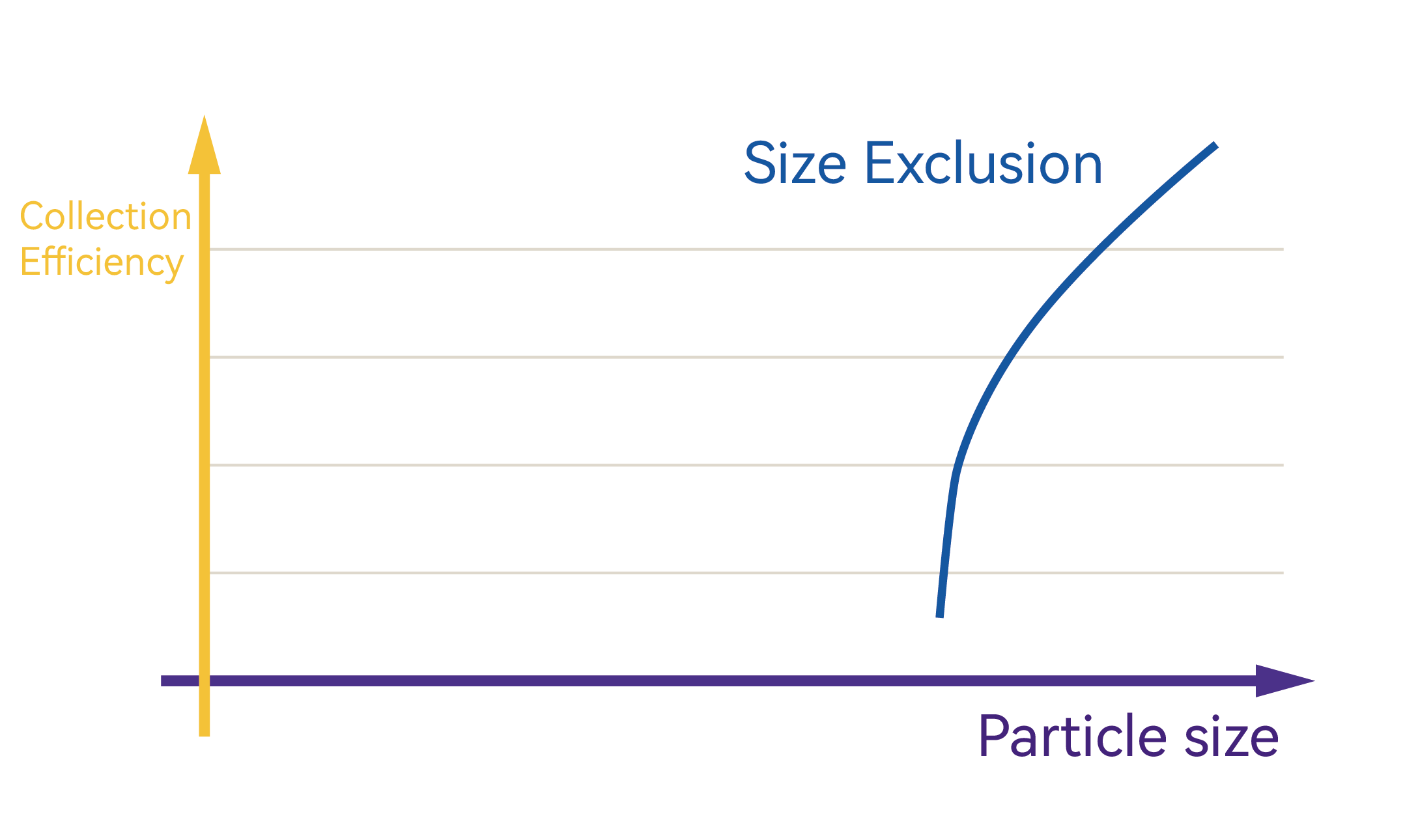
1. Size Exclusion: Removal of large particles.
2. Other Mechanisms: Removal of small particles.
Size Exclusion
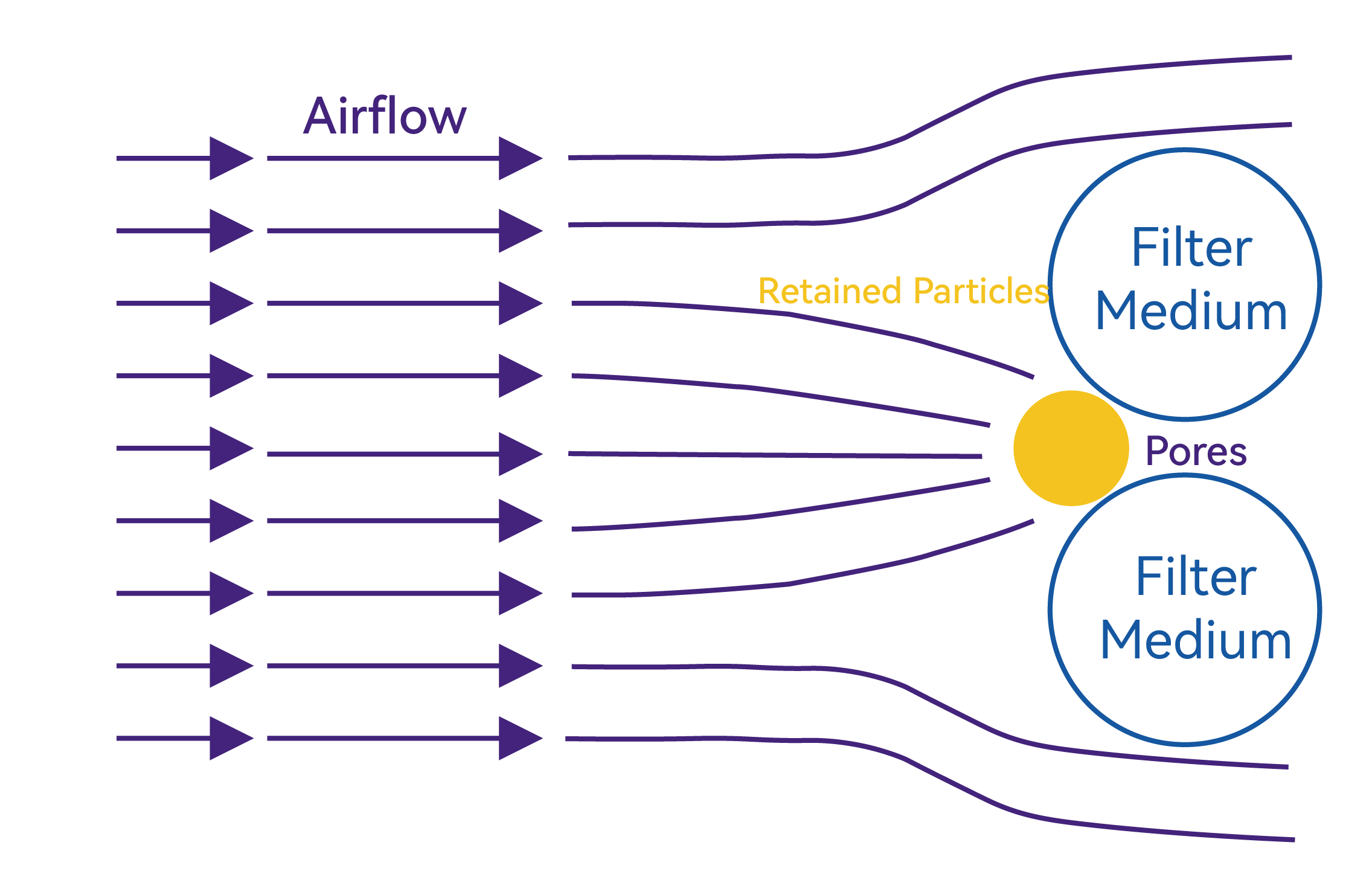
Size exclusion, also known as “sieving” or “mechanical retention,” is a mechanism for retaining particulates in dry gas streams, similar to liquid filtration. As the name implies, this mechanism applies to particles that are too large to pass through the tortuous channels of the filter media.
Assuming particles do not deform during filtration, this type of retention is independent of the gas flow rate through the filter.
Other Retention Mechanisms for Small Particles
Beyond size exclusion, the removal of smaller particles typically involves the following mechanisms: Diffusion Interception, Inertial Impaction, Gravitational Settling, and Electrostatic Attraction.
Diffusion Interception
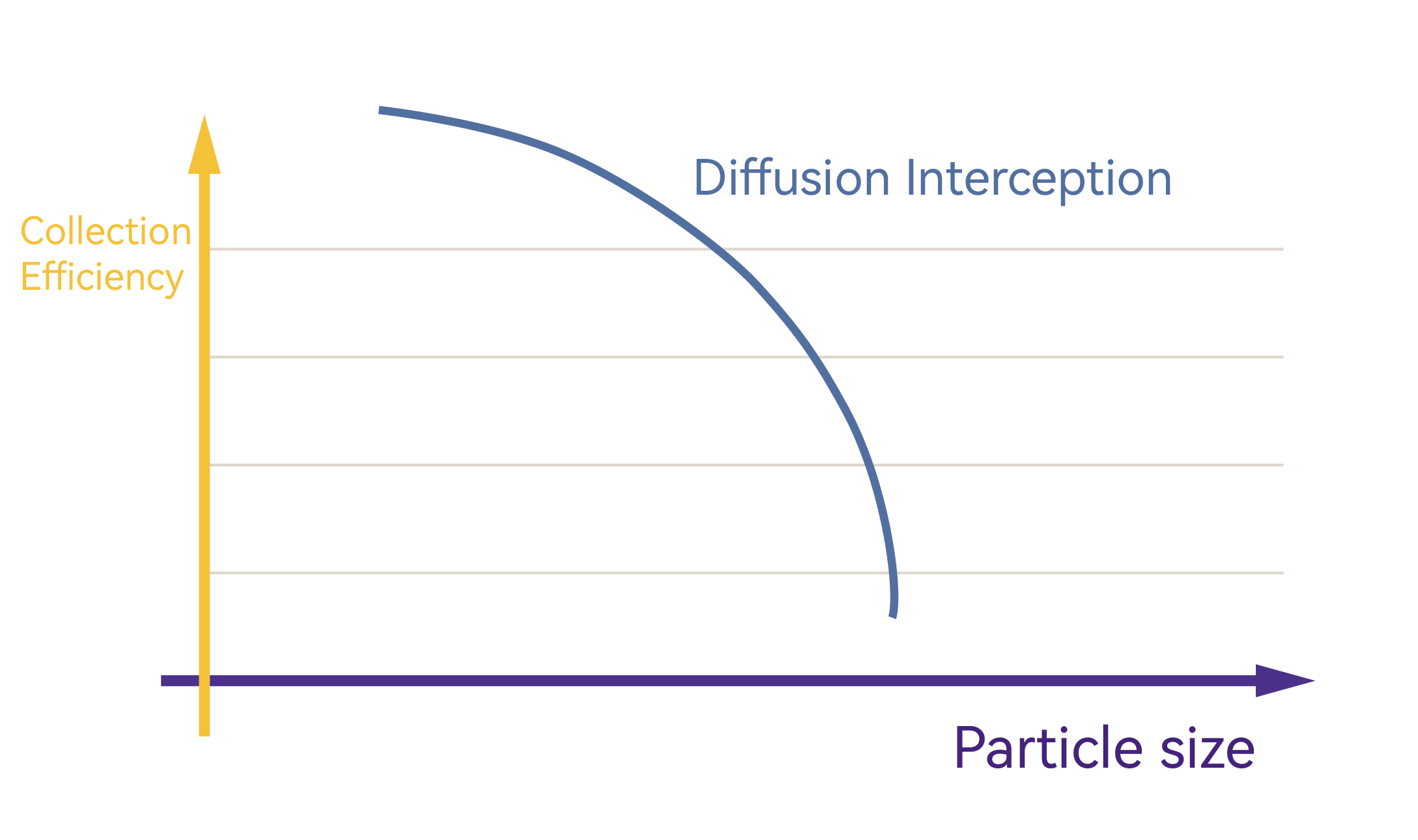
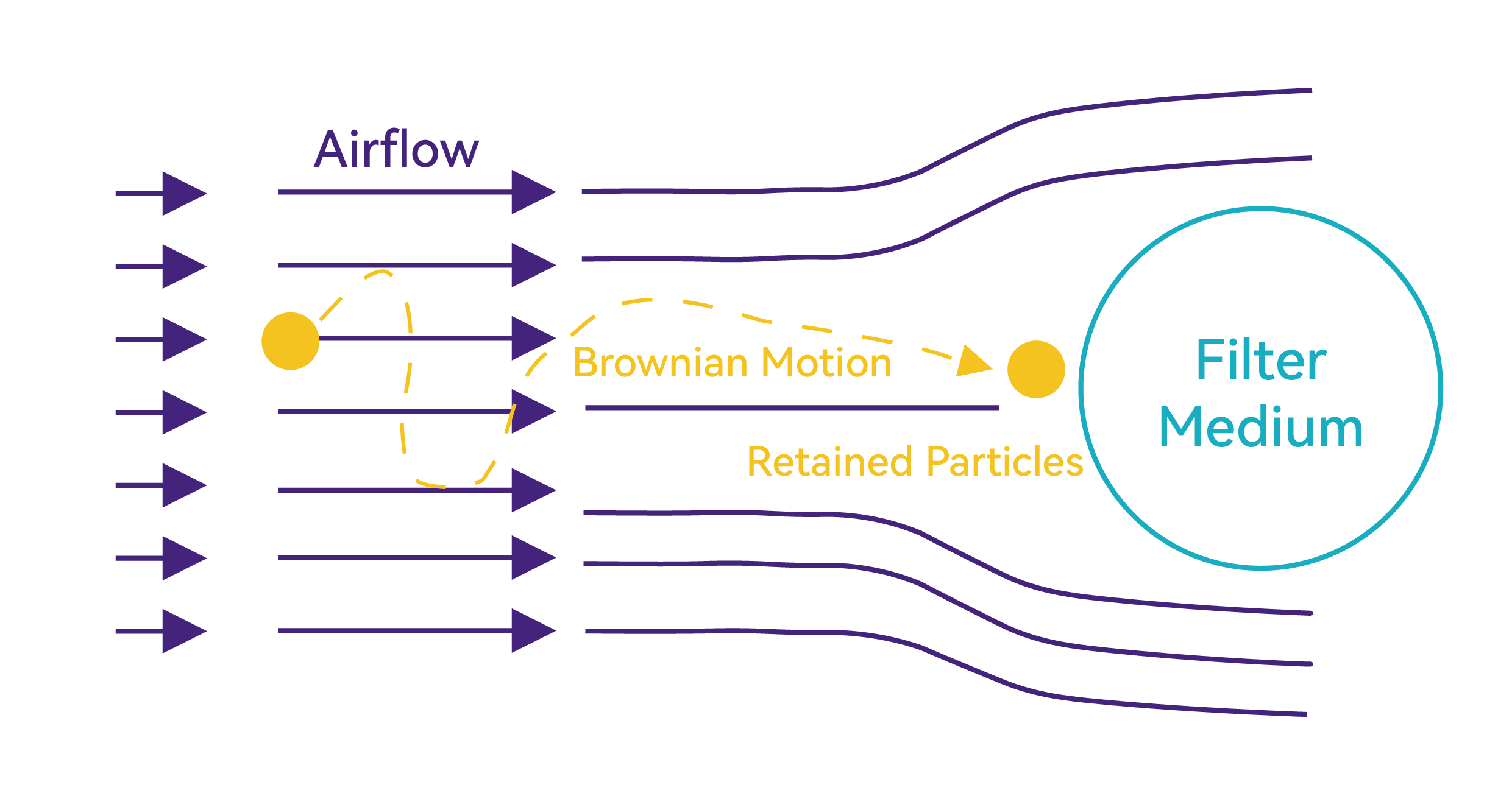
In diffusion interception, continuous and random collisions with air molecules cause Brownian motion, leading particles to deviate from the gas stream. Brownian motion increases the probability of particle contact with the filter media, thereby enhancing retention. However, Brownian motion has a greater effect on smaller particles; thus, the retention efficiency due to diffusion interception increases as particle size decreases.
Inertial Impaction
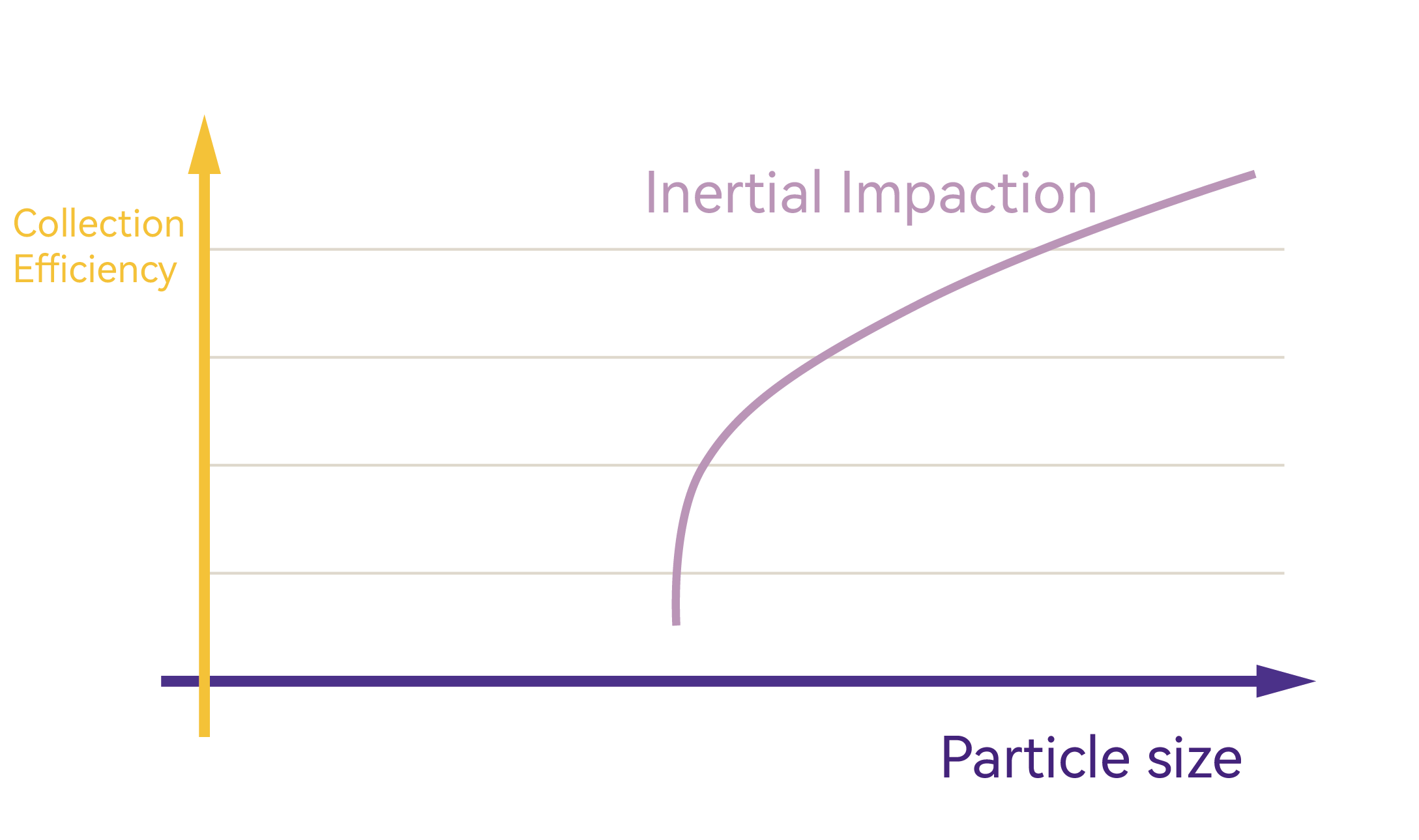
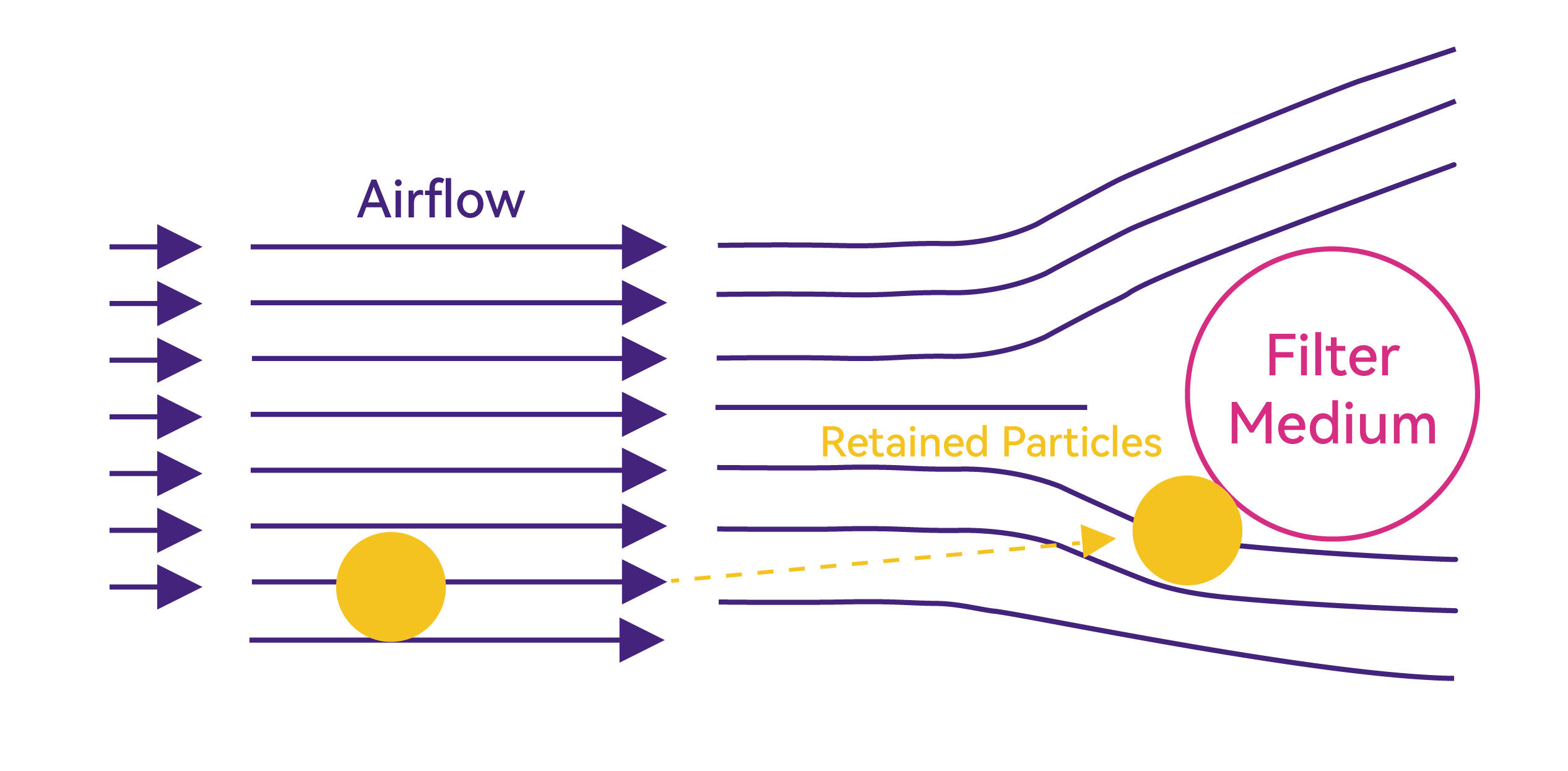
Inertia causes particles in the gas to deviate from the streamlines flowing around the filter media, resulting in impact with the media. This effect becomes more pronounced with increasing particle mass; therefore, retention efficiency due to this mechanism increases as particle size increases.
For submicron hydrophobic membranes (e.g., sterilizing-grade gas filters), inertial impaction is less significant for large particles, as these are typically retained by sieving. However, in coarse depth filters (e.g., pre-filters with larger pore sizes), inertial impaction plays a primary role in retaining particles that cannot be captured by sieving alone.
Gravitational Settling
Particles may also deviate from the gas stream due to gravitational settling and collide with the filter media. Similar to inertial impaction, this mechanism is more significant for larger particles, especially those with high density. For submicron hydrophobic membranes, this mechanism is less critical, as particles typically retained by gravity (similar to depth filtration) are more likely to be captured by sieving.
Electrostatic Attraction
Depending on the properties of the particles and the media, intermolecular forces can retain particles that are near or in contact with the filter media. Even under pressure fluctuation conditions, these particles remain firmly retained because intermolecular forces are significantly stronger than the drag force of the gas stream. The filtration efficiency of such filters depends on two parameters: air humidity and flow velocity. Humidity must be low, as electrostatic forces are strongest in dry air.
Dry air also reduces the risk of condensate formation within the filter matrix. Gas velocity is critical; sufficient contact time is required for the separation of the target particles from the initial stream.
Net Filtration Efficiency in Dry Air Filtration
The net filtration efficiency for particles is the sum of the individual mechanisms described above.
At a given gas flow velocity, very small particles are primarily retained by diffusion interception. As particle size increases and diffusion efficiency declines, inertial impaction, gravitational settling, and sieving become more dominant. The transition range between diffusion-dominated and inertia-dominated retention includes a particle size that is not effectively captured by either mechanism. This size is known as the Most Penetrating Particle Size (MPPS).
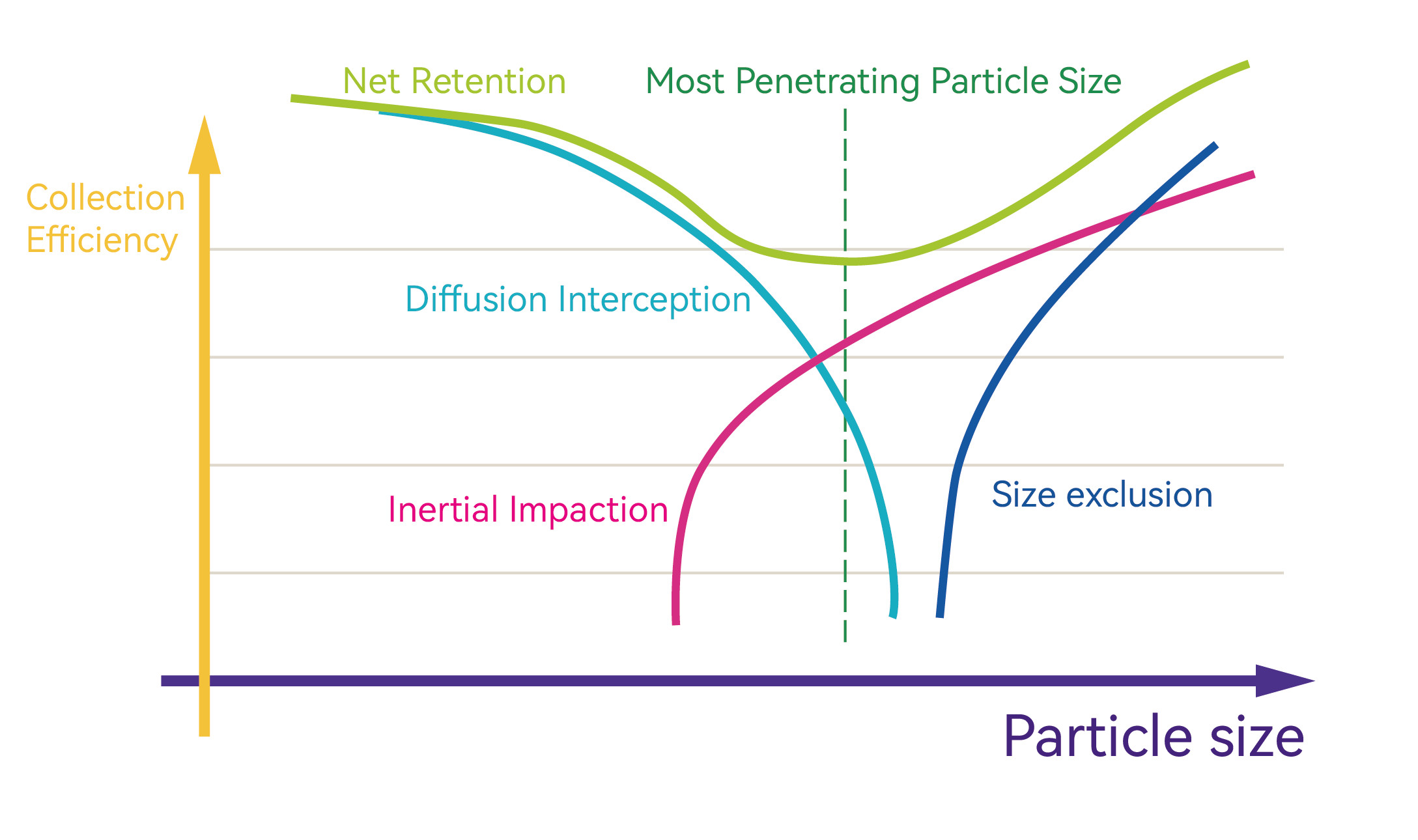
The concept of MPPS refers to the particle size most likely to penetrate the filter under the combined action of all aforementioned mechanisms. Net efficiency can be derived as a function of MPPS and air velocity.
MPPS depends not only on the filter media type but also on the gas flow velocity. At high flow rates and pressures, Brownian motion becomes less significant; consequently, the probability of capturing a given particle size via diffusion interception decreases. Air velocity has a relatively minor effect on inertial impaction, especially for membrane filters with smaller pore sizes, as inertial impaction is often overshadowed by the more effective sieving mechanism. The net retention effect is a function of air velocity, characterized by the shift in MPPS. These factors must be considered to achieve optimal filtration performance in dry gases.
As discussed, the most reliable mechanism for particle removal in gas streams using membrane filters is sieving, as its retention efficiency remains largely constant under varying process conditions. This mechanism primarily depends on the size of the contaminant and the true pore size of the membrane.
In the next issue of “Core Insights,” we will explore the relationship between the true pore size of gas filters and the nominal pore size claimed by suppliers. Stay tuned!