

Bottom line up front: for pharmaceutical manufacturers, wetting before integrity testing should be simple and controllable. In this study, Alipore® EZ (ZHC) filters were fully wetted by either forward flushing without back pressure or static soaking. After autoclaving at 136 °C for 60 min, the same soak-and-test approach delivered results with no significant difference from pre-sterilization values.
▶ 1 / Why “how you wet” shapes release more than “how you test”
In sterile filtration for pharmaceutical production, integrity testing is a critical checkpoint in the batch release chain. Both the bubble point and diffusional flow methods depend on fully wetted membrane pores; incomplete wetting can drive diffusional flow readings up and bubble point values down, leading to a failed result.
In conversations with customers, we hear a familiar story again and again: some filters on the market are simply hard to wet. They often need extended forward flushing, or even applied back pressure to expel air from the membrane pores—and a simple soak frequently isn't enough. On the production floor, that means flushing time, flow rate and back pressure all need repeated confirmation; longer and more complex procedures; more purified water or water for injection; and results that can vary between operators and batches—raising production costs and undermining quality consistency.
On top of that, some filters wet easily before sterilization but show noticeably poorer wettability afterward: the membrane itself changes, or insufficient process characterization leaves areas of the membrane or cartridge that water can no longer enter easily. A wetting step that once took only a simple soak may now demand higher back pressure, or repeated flushing, before the membrane is adequately wet—and running the test under routine conditions can end in failure.
For users, none of this is a matter of “waiting a few extra minutes.” It is a chain of real costs:
These are the questions this study set out to answer: Can your filter be fully wetted in less time, with a simpler procedure? And does that ease hold after sterilization?
▶ 2 / Study design: four regimens close to daily operation
The study used Alipore® EZ (ZHC) cartridge filters (part no. CEZ5217S1, dual-layer PES membrane 0.45/0.2 μm). Each group contained 10 cartridges, water served as the wetting medium, and the acceptance limits were a bubble point of ≥3520 mbar and a diffusional flow of ≤24 mL/min (test pressure 2760 mbar).
Four wetting regimens were tested in sequence: forward flushing at 3–5 L/min for 10 min without back pressure; static soaking for 30–60 min; flushing at 3–5 L/min for 10 min under 2 bar of back pressure; and static soaking for 30–60 min after autoclaving at 136 °C for 60 min.
▶ 3 / Results: a short flush or a simple soak is all it takes
| Wetting regimen | Mean diffusional flow (mL/min) | Mean bubble point (mbar) |
|---|---|---|
| Forward flush, 3–5 L/min, 10 min | 16.35 | 4750 |
| Static soak, 30–60 min | 14.25 | 4770 |
| Flush under 2 bar back pressure, 10 min | 13.02 | 4770 |
| Static soak, 30–60 min, after autoclaving | 14.07 | 4755 |
All four regimens passed. In every group, all 10 cartridges came in above the bubble point limit, with tightly clustered values. Even the highest mean diffusional flow—16.35 mL/min in the no-back-pressure flush group—still left a margin of 7.65 mL/min below the 24 mL/min limit. For users, that means results not only meet a clear pass criterion, but carry a comfortable safety margin.
[ FIGURE 1 ]
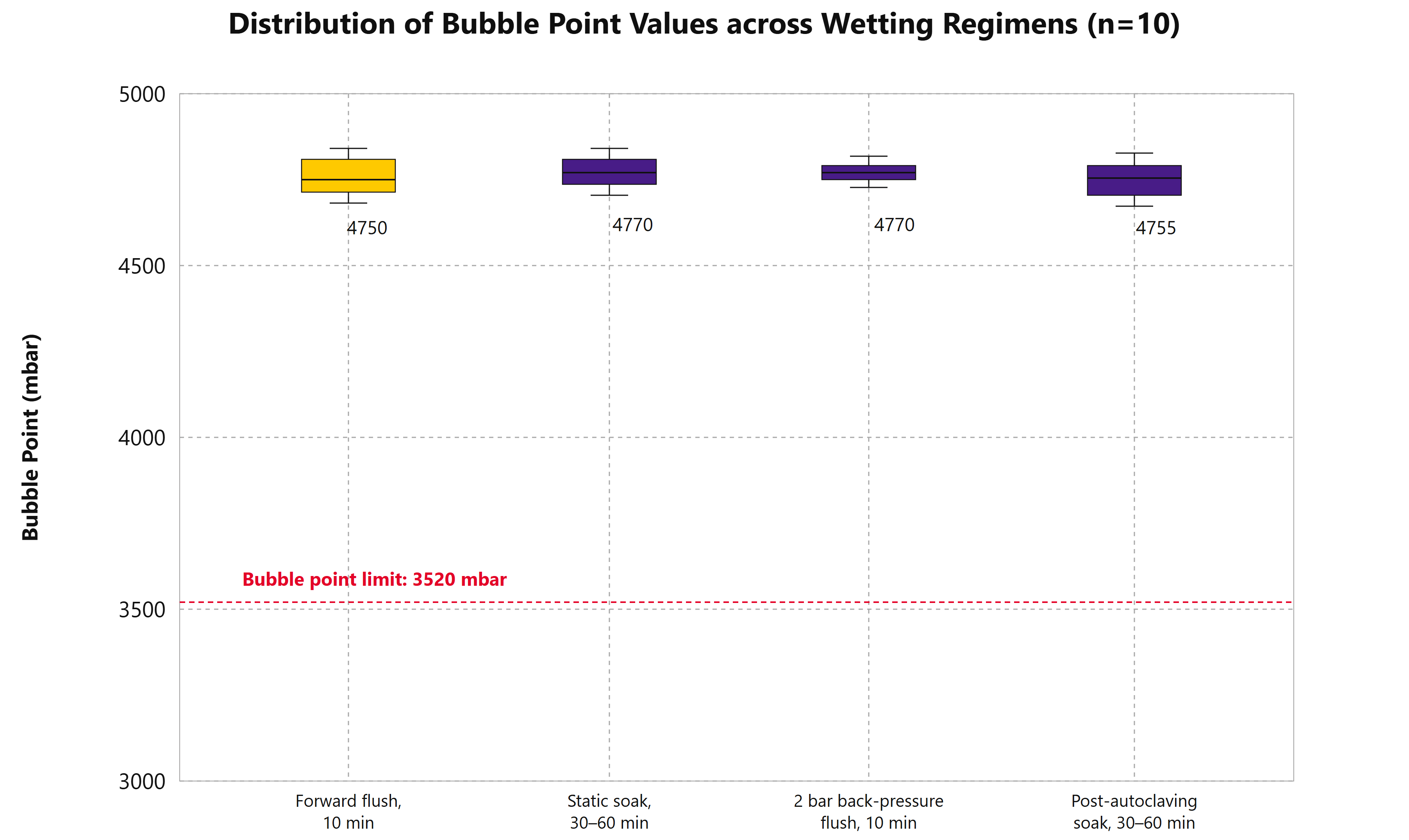
Figure 1 | Distribution of diffusional flow values across wetting methods (n=10)
[ FIGURE 2 ]
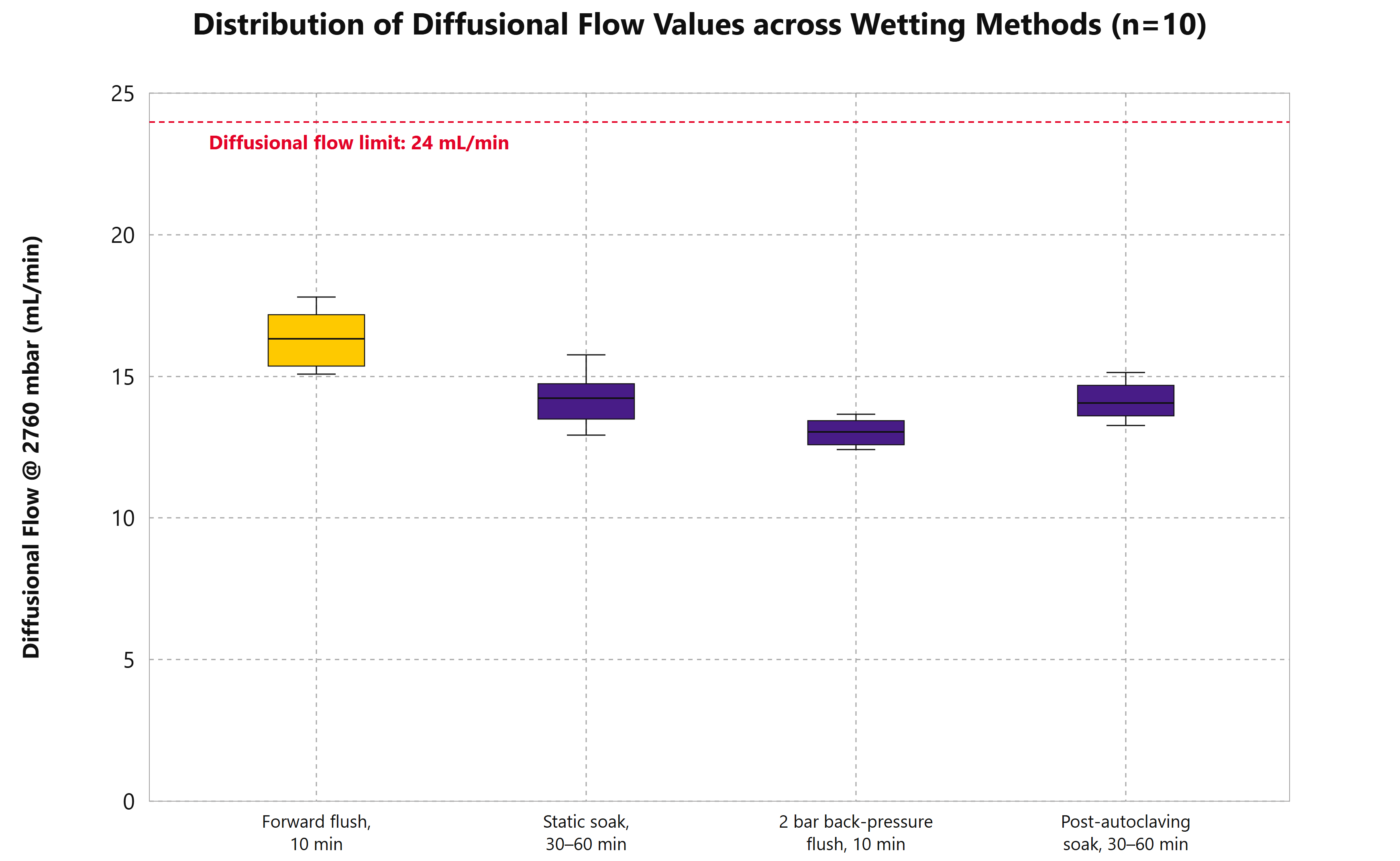
Figure 2 | Distribution of bubble point values across wetting regimens (n=10)
▶ 4 / After sterilization, a simple soak still works
Loss of wettability after sterilization is a headache few filtration processes want: an established, simple wetting procedure suddenly stops being enough, and the operation escalates into longer flushing, higher back pressure or repeated cycles—raising both operating cost and the risk of failure.
In this study, after autoclaving at 136 °C for 60 min, cartridges needed only a 30–60 min static soak: mean diffusional flow was 14.07 mL/min and mean bubble point 4755 mbar, still far below the flow limit and well above the bubble point requirement. Compared with pre-sterilization soaking, neither diffusional flow (P=0.440) nor bubble point (P=0.353) showed a statistically significant difference.
In other words, under the conditions of this study, autoclaving did not compromise the wettability of Alipore® EZ (ZHC) filters.
▶ 5 / From repeated flushing to a simple soak: four things Alipore® EZ (ZHC) changes
If you have run into wetting problems with other filters—extended flushing, pressure-assisted flushing, declining wettability after sterilization, integrity tests that are hard to pass, repeated retesting, even deviation investigations—then Alipore® EZ (ZHC) filters offer a more direct kind of value:
For customers who have chased wetting issues with other filters, the value of an easily wetted membrane is tangible: one less variable during validation, one less operational dependency in routine batches, and an easier way to rule out “insufficient wetting” when investigating anomalies. It doesn't change the integrity test standard—it simply makes a passing result easier to achieve, consistently.
Wetting is a small step before integrity testing, yet it determines whether that test can be completed reliably and reproducibly. In this study, Alipore® EZ (ZHC) filters passed all four wetting regimens—forward flushing without back pressure, static soaking, and flushing under back pressure—both before and after autoclaving, with bubble point and diffusional flow values meeting the acceptance criteria with room to spare. For pharmaceutical manufacturers, this kind of wettability turns wetting from a variable that demands repeated confirmation back into what it should be: a simple, controllable routine step—for more stable production and more controllable quality.
◆
Have you run into wetting challenges during integrity testing? We'd love to hear about your experience.